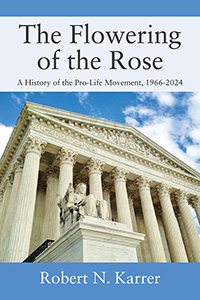
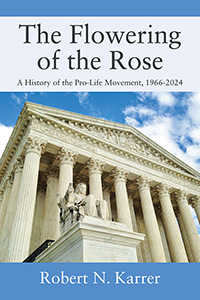
The Flowering of the Rose chronicles the history of the pro-life movement in the USA, from its humble beginnings in the late 1960s to its celebration when Dobbs v. Jackson Women’s Health overturned Roe v. Wade in 2022. Along this 60-year path, pro-lifers suffered many defeats in Congress and the Courts. The movement endured internal disagreements over strategy and policy, between the no-compromise absolutists who favored laws that would completely ban abortion and the pragmatic incrementalists who preferred passage of laws that could survive a court challenge. Evangelicals joined the movement in 1979 which had been heretofore almost exclusively Catholic. While Operation Rescue captured headlines, so did pro-life efforts to prohibit the partial-birth abortion method in the 1990s. Established pro-life groups had to quell public condemnation when they were erroneously linked to “pro-life” terrorists who committed acts of murder and arson. Despite failings and conflicting messages, the pro-life movement has survived. At the dawn of the 21st century the movement had the support from nearly half the population. In the last two decades the movement has become more diverse and sophisticated. There is now a proliferation of new groups and over 3,000 pregnancy care centers. A new generation of young activists speak on college campuses, debate pro-choice challengers, and use social media through popular podcasts. The movement enters an uncertain future. Dobbs accelerated pro-life gains in many states but generated successful responses from the pro-choice community.